.
Eleni Tomadaki
Eleni Tomadaki
Gianni Manhattan is pleased to present ., Eleni Tomadaki’s first solo exhibition at the gallery.
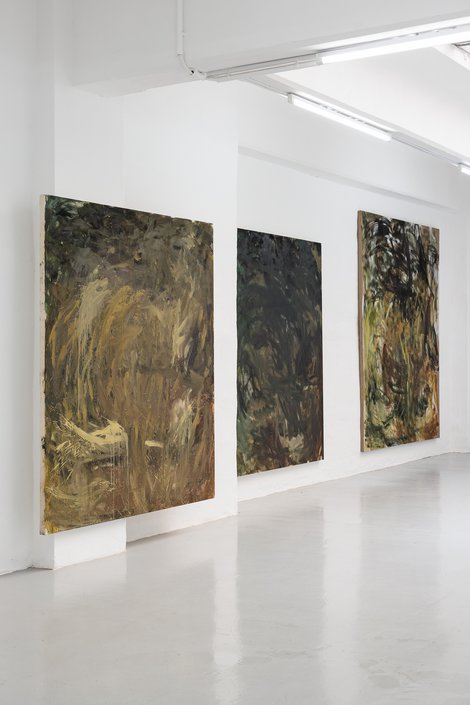
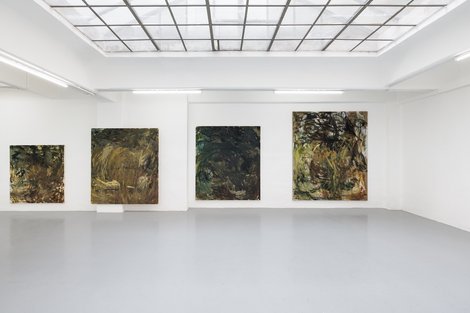
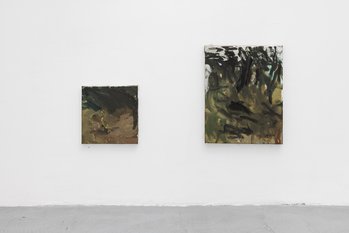
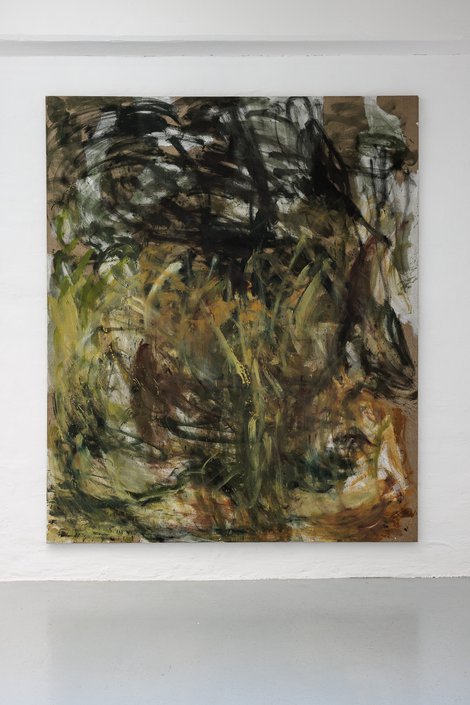
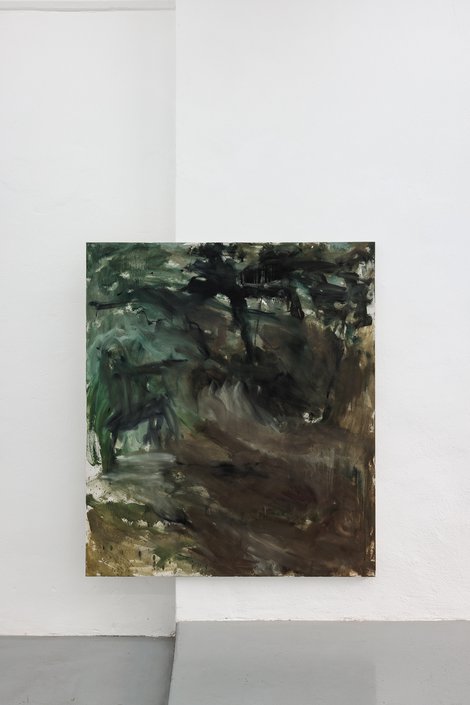
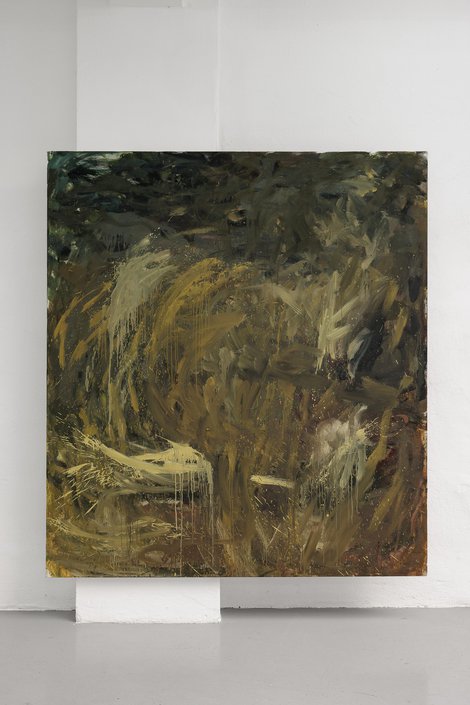
Translations can deviate significantly from their source, borrowing different analogies and sentence constructions that may make little to no sense in the source language but offer legibility in the target one. Tomadaki’s paintings, which are a form of translation, ask for similar allowances. Translating an image into painting, repeating it across different formats, dissecting it into gestures and leaving the bare bones of figuration: an image rendered into its vectors, curves, and outlines of the forms that she was looking at while painting. What remains has little to do with the source image, yet exists in its own new logic as a decoded and translated gesture.
Translations can deviate significantly from their source, borrowing different analogies and sentence constructions that may make little to no sense in the source language but offer legibility in the target one. Tomadaki’s paintings, which are a form of translation, ask for similar allowances. Translating an image into painting, repeating it across different formats, dissecting it into gestures and leaving the bare bones of figuration: an image rendered into its vectors, curves, and outlines of the forms that she was looking at while painting. What remains has little to do with the source image, yet exists in its own new logic as a decoded and translated gesture.
28.05.26—27.06.26
GIANNI MANHATTAN, Wassergasse 14, 1030 Vienna
> Installation views
Gianni Manhattan is pleased to present ., Eleni Tomadaki’s first solo exhibition at the gallery.
Translations can deviate significantly from their source, borrowing different analogies and sentence constructions that may make little to no sense in the source language but offer legibility in the target one. Tomadaki’s paintings, which are a form of translation, ask for similar allowances. Translating an image into painting, repeating it across different formats, dissecting it into gestures and leaving the bare bones of figuration: an image rendered into its vectors, curves, and outlines of the forms that she was looking at while painting. What remains has little to do with the source image, yet exists in its own new logic as a decoded and translated gesture.
Translations can deviate significantly from their source, borrowing different analogies and sentence constructions that may make little to no sense in the source language but offer legibility in the target one. Tomadaki’s paintings, which are a form of translation, ask for similar allowances. Translating an image into painting, repeating it across different formats, dissecting it into gestures and leaving the bare bones of figuration: an image rendered into its vectors, curves, and outlines of the forms that she was looking at while painting. What remains has little to do with the source image, yet exists in its own new logic as a decoded and translated gesture.
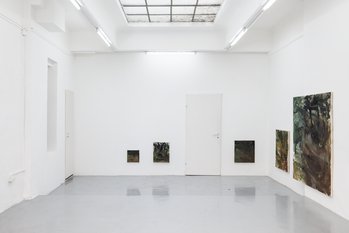
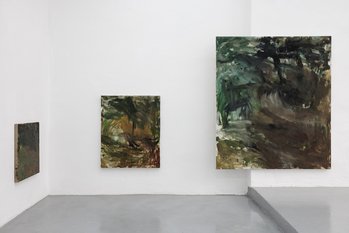
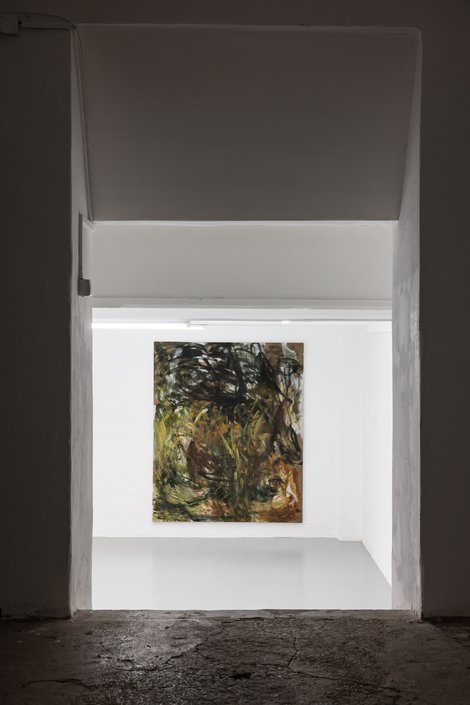
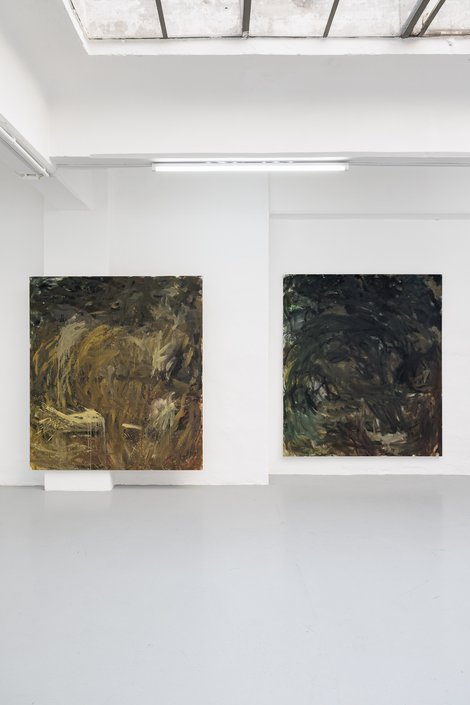
Tomadaki’s paintings enact a convergence towards zero that never quite arrives. The paintings are installed so that they align along the bottom edge, the image repeating while shrinking with each iteration. But the show also proposes its inverse: beginning from the smallest painting, the sequence becomes a zoom. The dot at the end of a sentence, held up to the light, expanded into something you can move through.
What happens when reproduction is not mechanical but made by hand and painterly? Tomadaki’s paintings quietly invert the terms of reproduction. Rather than the original carrying authority, each iteration defers to the next, and the source image becomes increasingly incidental and acts as a catalyst, not a subject. This act of repeated translation reveals that the copy does not degrade the original; it suspends it, holds it at a distance and in doing so exposes the gap between the visible and the legible.
What happens when reproduction is not mechanical but made by hand and painterly? Tomadaki’s paintings quietly invert the terms of reproduction. Rather than the original carrying authority, each iteration defers to the next, and the source image becomes increasingly incidental and acts as a catalyst, not a subject. This act of repeated translation reveals that the copy does not degrade the original; it suspends it, holds it at a distance and in doing so exposes the gap between the visible and the legible.